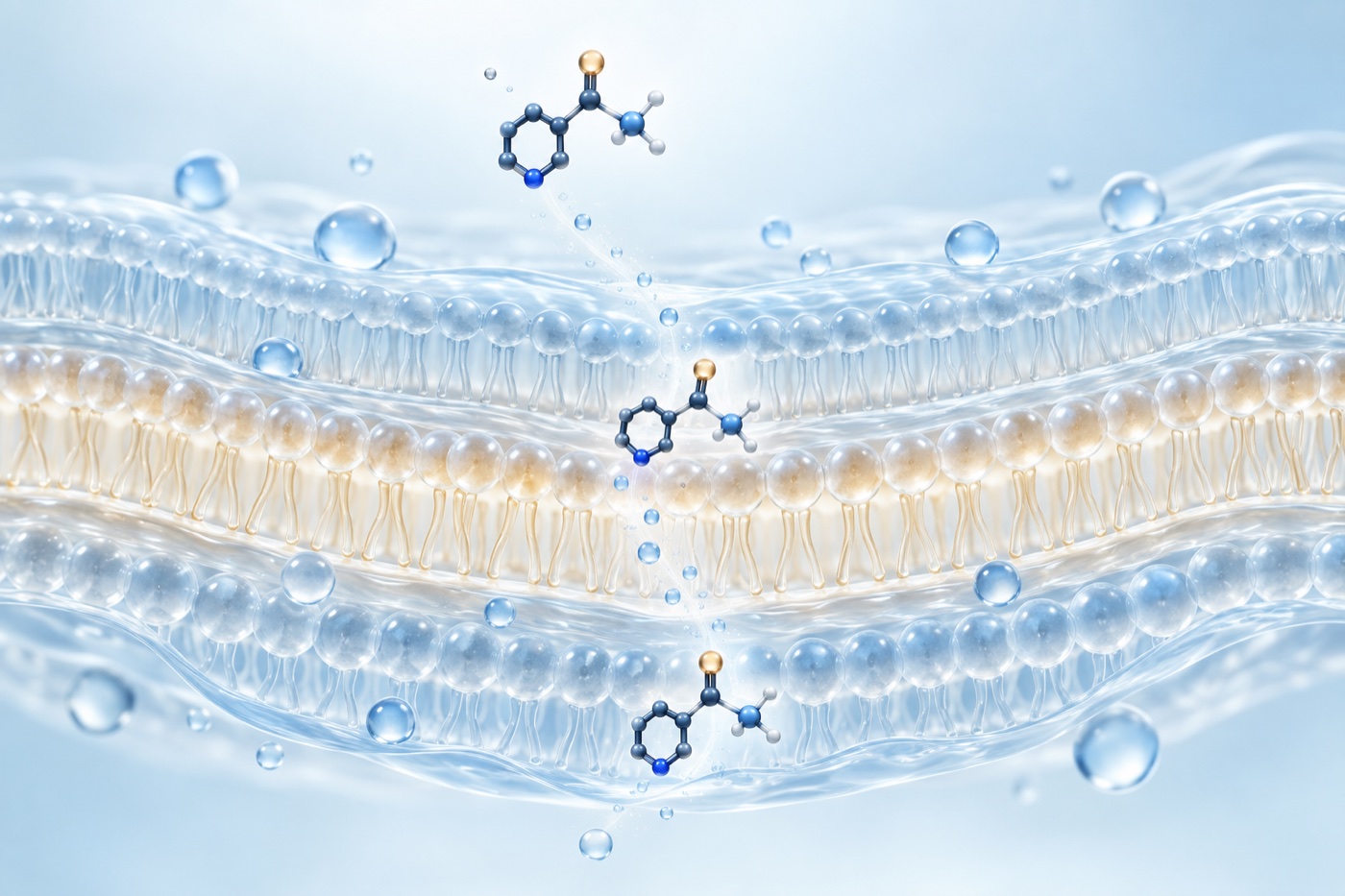
What one study actually tested
A 2005 randomized, double-blind study involved 50 white women with signs of facial photoaging. They used a formula containing 5% niacinamide on one side of the face and its vehicle control on the other, twice daily for 12 weeks. Researchers reported improvements in several measures, including the appearance of fine lines and uneven pigmentation. [1]
Read the result within its boundaries
That study supports interest in the tested formulation under those conditions. It does not establish that higher percentages are better, that every skin population responds identically, or that any serum listing niacinamide will match the result.
For your own comparison, look for a disclosed concentration, relevant testing, and clear directions. If a number is not disclosed, leave it unknown rather than estimating it from marketing copy. [1]
A formula example: niacinamide with Nonapeptide-1
SumaNurica’s Nonapeptide Niacinamide Rejuvenating Serum lists Niacinamide and Nonapeptide-1, as well as Panthenol and Ectoin. We do not assign it the 5% concentration used in the study: the ingredient list reviewed here does not supply that number. The trial above is not a study of this serum. [2]
A common question
Does ingredient order tell me the exact niacinamide percentage?
An ingredient list does not provide an exact percentage. Use a manufacturer’s explicit concentration disclosure rather than an estimate.
Sources & context
Nonapeptide Niacinamide Rejuvenating Serum
Explore the manufacturer’s ingredient list and directions. This is a brand reference, not an independent product test.
Read the official formula information →